
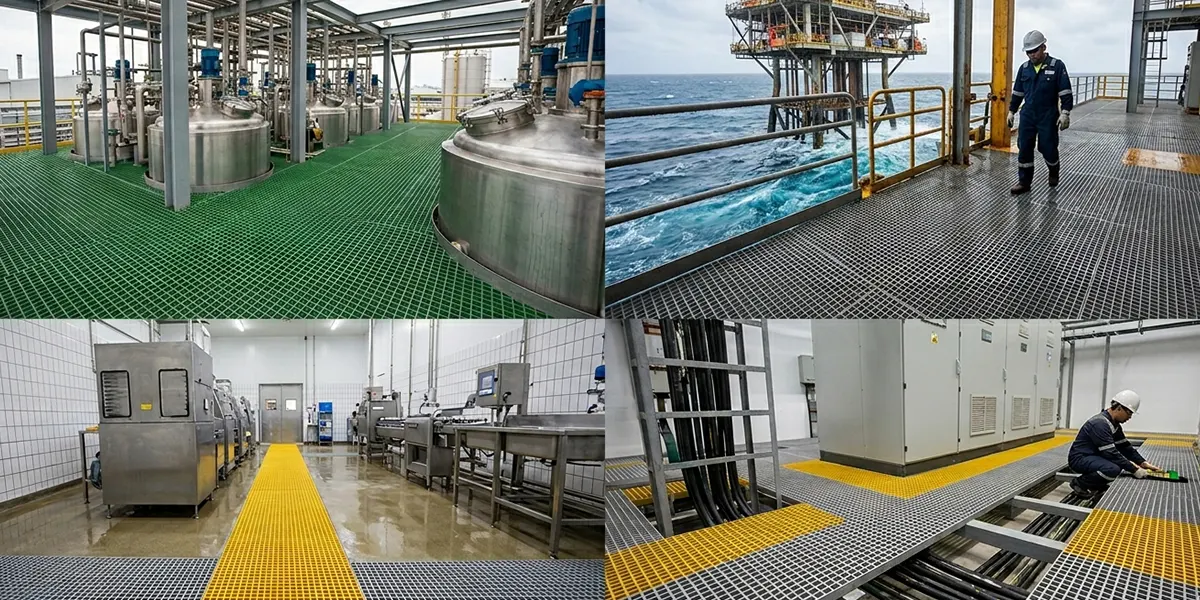
Industrial applications prefer fiberglass molded gratings because these products offer superior strength and corrosion resistance and require minimal maintenance. The performance of these gratings depends mainly on the selection of resin systems that builders use to create their products. Various environments, which include chemical plants and marine settings, need specific resin characteristics to maintain their endurance and protection. The top fiberglass moulded gratings manufacturer selects resin systems according to application requirements, which guarantees their products will perform efficiently and last longer while meeting industry regulations. The correct industrial resin selection requires knowledge of resin distinctions, which you must understand to make your decision.
What Are Fiberglass Moulded Gratings?
The composite material used in fiberglass moulded gratings results from the combination of glass fibers and resin systems, which create a strong yet durable and corrosion-resistant material. The lightweight design and extended operational lifespan of these gratings make them suitable for use in chemical processing plants, marine facilities, and wastewater treatment plants. The gratings provide an advantage over traditional metal systems because they do not rust and require only basic upkeep. Leading Fiberglass Moulded Gratings Manufacturers design these gratings to withstand harsh environmental conditions while ensuring safety and structural integrity.
Main features include:
- Large strength-to-weight ratio
- Excellent rust resistance
- Anti-slip surface for safety
- Low maintenance and long lifespan
Role of Resin Systems in FRP Gratings
Resin systems control how well fiberglass moulded gratings function. The binding agent functions to bond glass fibers together while delivering protection against chemical and thermal environmental pressures. The correct resin selection enables better grating performance under particular operational conditions. The resin system that fiberglass moulded gratings manufacturers select serves to fulfill the different operational needs that various industries require.
Resin systems exist to perform the following functions:
- The system delivers protection against chemical attacks and corrosion damage.
- The system protects against high temperatures.
- The system delivers fire-retardant capabilities.
- The system increases the object's material strength.
Key Types of Resin Systems Used
Various resin systems are used to manufacture fiberglass moulded gratings which meet specific environmental and industrial requirements. The resin selection process determines how strong and durable the grating material will perform against chemical attacks, heat exposure, and fire incidents. The most appropriate resin system needs to be selected through application condition assessment, which experienced Fiberglass Moulded Gratings Manufacturers conduct.
The main types of resin systems used include:
- Polyester Resin: This material provides cost-effective performance, which makes it suitable for a wide range of general-purpose applications
- Vinyl Ester Resin: This material provides exceptional chemical protection and corrosion resistance, which makes it suitable for severe industrial conditions
- Phenolic Resin: This material provides effective fire protection together with minimal smoke production in environments with high fire danger
- Epoxy Resin: This material delivers exceptional mechanical strength and durability, which protects against fatigue in demanding industrial applications
Polyester Resin: Cost-Effective General Use
Polyester resin serves as the primary material used in fiberglass moulded gratings because it offers both affordable pricing and flexible application possibilities. The product functions effectively in common use cases that do not demand extreme protection against chemical substances. Polyester resin serves as the preferred material choice among manufacturers of fiberglass moulded gratings who need to keep their project expenses within specific limits.
Advantages of polyester resin:
- Cost-effective solution
- Good mechanical strength
- The material exhibits suitability for use in mild industrial environments.
Limitations:
- The material exhibits moderate protection against chemical substances.
- The material fails to function properly when used in settings that contain highly corrosive materials.
Vinyl Ester Resin: Superior Chemical endurance
Vinyl ester resin shows exceptional chemical resistance while it withstands extreme environmental conditions. The material provides better strength than polyester resin, which makes it appropriate for use in industries that handle rust materials.
The main advantages of the product include these features:
- The product works very well against both alkalis and acids.
- Subsequently, the product lasts longer since it is now more durable.
- The product is appropriate for use in both marine and chemical manufacturing sectors.
Phenolic Resin: High Fire Resistance
The material of phenolic resin serves as a fire safety solution for applications that require fire protection. The material offers outstanding fire safety protection together with minimal smoke production, which makes it the ideal material for dangerous work environments. The manufacturers of fiberglass moulded gratings use phenolic resin for their products, which need to meet strict fire safety regulations.
Essential characteristics:
- The material provides outstanding protection against fire hazards.
- The product emits minimal smoke while maintaining low toxic emission rates.
- The material serves as a compatible solution for both oil and gas operations and offshore platform use.
Epoxy Resin: High Strength and Stability
Epoxy resin provides both excellent mechanical strength and long-lasting material performance. The material functions best in settings that demand high load capacity and protection against fatigue. The manufacturers of Fiberglass Moulded Gratings need to use epoxy resin because they require specific industrial applications, which makes the product more expensive.
Advantages include:
- Products exhibit both outstanding strength and exceptional durability.
- Items display strong resistance against both cracking and wear damage.
- The product is designed for use in demanding sector environments.
Comparing Resin Systems: Side-by-Side Analysis
The selection process for resin systems needs a complete property assessment, together with performance evaluation and environmental compatibility testing. Each resin offers unique benefits that companies should evaluate to choose their best options. The best solution for their needs is determined by fiberglass moulded grating manufacturers through their thorough product assessments.
Key comparison factors include:
The chemical resistance of vinyl ester provides the strongest protection against aggressive chemical attacks, while epoxy offers better defense than polyester, which works best for mild chemical exposure.
Phenolic resin excels as a fire-retardant material that produces minimal smoke during fires. Epoxy resin achieves its highest strength and durability, which makes it appropriate for use in demanding heavy-duty applications.
The most economical material for general use is polyester resin. The thermal performance of phenolic and epoxy resins exceeds their capabilities at elevated temperatures.
Vinyl ester functions optimally in marine environments and corrosive environments, while polyester functions well in environments with less challenging requirements.
Choosing the Right Resin for Different Environments
The selection of a suitable resin system represents a vital step that determines both performance results and material durability. The manufacturers of fiberglass moulded gratings conduct environmental assessments to determine suitable materials for their products.
Application-based selection:
- Chemical plants need vinyl ester resin as their primary material.
- Marine environments require either vinyl ester or epoxy as a suitable material.
- The oil and gas industry uses phenolic resin as its primary material.
- Food processing facilities require either polyester or epoxy as their primary material.
- Vinyl ester resin serves as the primary material for wastewater treatment facilities.
Industry Standards and Compliance
Fiberglass moulded gratings need to fulfill multiple industry standards, which guarantee their safe operation and performance capabilities. The manufacturers of fiberglass moulded gratings follow strict manufacturing standards, which enable them to produce dependable industrial products.
Common standards include:
- Fire safety standards (UL 94)
- ASTM guidelines for strength and durability
- Chemical resistance certifications
- Slip resistance and safety norms
Innovations in Resin Technology
The performance of fiberglass moulded gratings keeps on improving through ongoing developments in resin technology. The present-day solutions aim to improve three essential features, which include durability, sustainability, and safety. The manufacturers of fiberglass moulded gratings now use advanced materials to meet the changing needs of their industry.
The recent innovations that have been introduced include:
- Hybrid resin systems, which improve performance.
- Eco-friendly and low-emission resins.
- The development of advanced fire-retardant materials.
- Coatings that provide high performance under severe environmental conditions.
Conclusion
The selection of the appropriate resin system for fiberglass moulded gratings enables users to achieve optimal performance and extended product lifespan across various environmental conditions. The different resin types available in the market provide multiple advantages, which include budget savings and protection against chemical substances and fire hazards. Industries can use their knowledge about these distinctions to create better decision-making processes. Fiberglass Moulded Gratings manufacturers have established credibility to help customers select appropriate materials by verifying safety requirements, functional specifications, and product durability for their expected lifetime.
FAQs
1. What is the best grating resin for chemical environments in fiberglass gratings?
Vinyl ester resin!'n be a direct preference, as it provides optimum protection that allows greater resistance from chemicals and atmospheric corrosion.
2. Are phenolic resin gratings fireproof?
The materials demonstrate strong fire resistance while producing minimal smoke, which makes them suitable for use in dangerous situations.
3. Why do Fiberglass Molded Gratings Manufacturers use polyester resin?
The material provides affordability together with suitability for most common applications.
4. What is the most durable resin for FRP gratings?
The highest mechanical strength, together with maximum durability, exists in epoxy resin.
5. How do I choose the right resin system for my application?
Environmental factors like chemicals, temperature, fire risk, and budget needs require assessment together with guidance from experienced Fiberglass Moulded Gratings Manufacturers.
Recent Post
Fire Retardant Properties of FRP Moulded Gratings: Standards and Compliance Explained
Comparing Resin Systems Used in Fiberglass Moulded Gratings for Different Environments
Why Indian FRP Moulded Gratings Manufacturers?
Why Partner with Experienced Fiberglass Gratings Manufacturers?
The Science Behind FRP Gratings: Strengths, Corrosion Resistance, and Design
Why FRP Pultruded Gratings are Transforming Industrial Flooring Solutions
Why FRP Moulded Gratings Are Transforming Chemical and Utility Infrastructure
Why Indian Industries Are Making the Shift to FRP Cable Trays and What It Means for the Future
Why FRP Pultruded Gratings Are Spearheading India's Anti Corrosion Revolution